Naples attracts adjectives at an alarming rate. Chaotic. Vibrant. Authentic. By the time you arrive, half the work of seeing it may already have been replaced by somebody else’s vocabulary.
I would suggest starting again.
In Rione Sanità, begin with a place, a person explaining it, and the time to listen. The neighbourhood offers a particularly compelling way to understand how a city’s past continues to be cared for in the present.
Beneath a church, another city
The Basilica of Santa Maria della Sanità stands above the ancient burial ground associated with the Catacombs of San Gaudioso. The relationship between the church and what lies below it makes the idea of a layered city wonderfully concrete.
Upstairs and downstairs belong to different worlds, yet they occupy the same piece of Naples. Architecture, belief and the treatment of the dead begin to connect.
A good visit gives those connections enough context. Underground places can easily become a collection of unusual sights. I would rather understand what a space meant to the people who used it, and how its meaning changed over time.
That is where a knowledgeable local explanation earns its place in the day.
Ask who is caring for the story now
Cooperativa La Paranza was founded in Rione Sanità in 2006. Its work with the neighbourhood’s cultural heritage includes guiding, conservation and the development of opportunities connected to those places.
For a traveller, this adds a second set of questions. Who maintains the site? Who studies it? Who welcomes visitors? Where does the work created by a visit take place?
These are practical questions, and they make cultural travel more interesting. A monument is also a responsibility. Somebody has to unlock doors, train people, explain fragile things and make decisions about their future.
Beauty has a working infrastructure. It deserves our attention too.
Walk with curiosity and ordinary courtesy
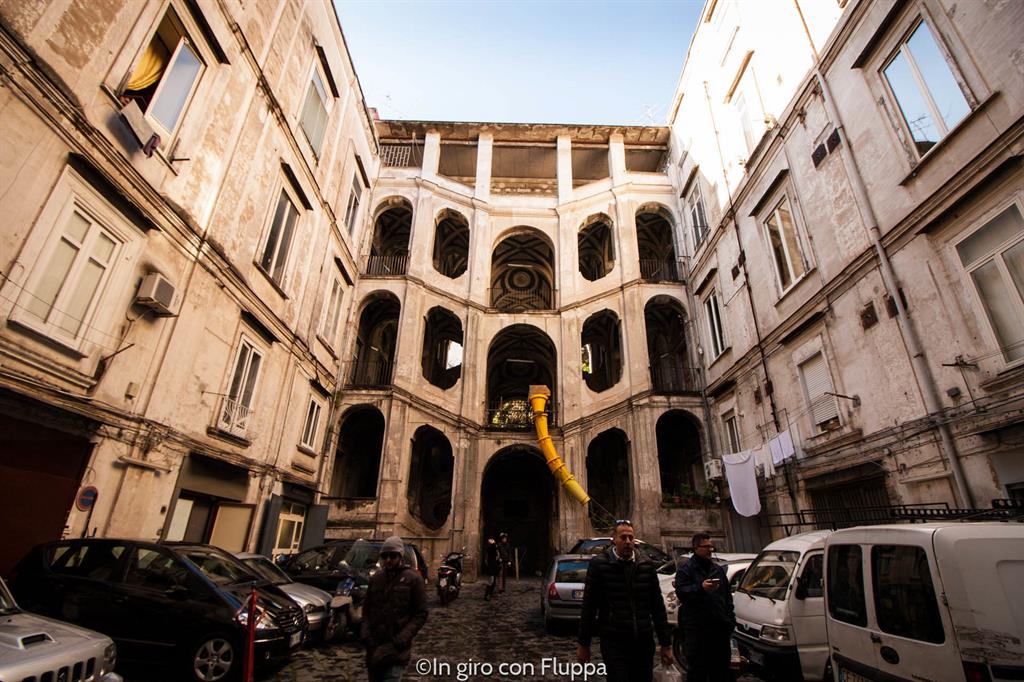
After a planned visit, leave time to experience the surrounding neighbourhood at street level. Look at the architecture. Stop for something you would enjoy eating or drinking. Be interested without treating daily life as a performance staged for your camera.
This is especially important in a place so often described through dramatic contrasts. People live here. Their street is allowed to be an ordinary street as well as a meaningful part of your journey.
I would arrange the day around one or two substantial encounters, with room for the conversations they open. Check current tours, access arrangements and meeting points directly with the site organisers before setting out.
You may leave remembering a staircase, an underground space or a detail in a church. You may also remember how someone explained the work they do.
That is a richer introduction to Naples than a list of adjectives. The city has plenty to say once we stop finishing its sentences.