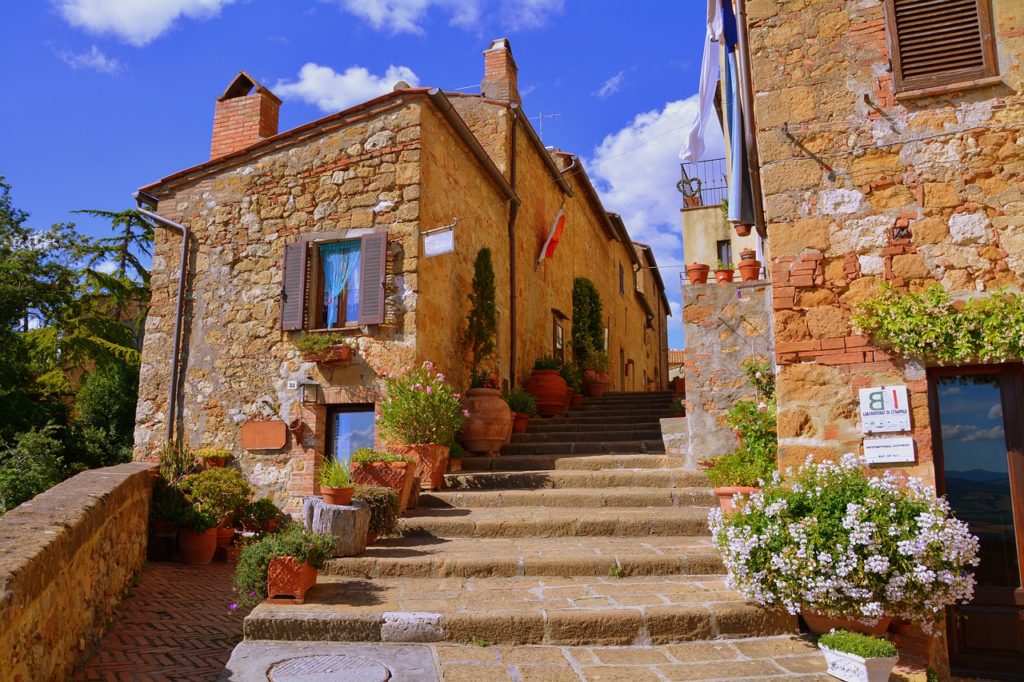
Imagine becoming pope and deciding that your home village could use some improvements.
Most people might suggest better paving. Pius II had a more ambitious brief.
The village was Corsignano. The town we know as Pienza grew from his fifteenth-century project to reshape it according to Renaissance ideas. Architect Bernardo Rossellino helped give that ambition a visible form. Today, the centre offers a remarkably concentrated lesson in how buildings can organise both space and the way we feel within it.
Fortunately, there is also cheese.
Stand in the piazza before you start walking
Piazza Pio II brings the cathedral and surrounding palaces into a carefully considered relationship. Its trapezoidal shape and paving help organise the view.
You can read all this in a guidebook. I would first try it with your feet.
Stand at one edge. Move towards the centre. Turn slowly. Notice which building draws your attention and what happens when you change position. Architecture becomes easier to understand when you allow yourself to experience its decisions.
Then consider the person behind the project. A pope returning to his birthplace could inscribe an idea of order, culture and authority into its very fabric. That is a fascinating ambition to encounter at the scale of a small town.
It also gives you a better question than “Which is the main photo spot?”
Follow your appetite into the landscape
Pienza is closely associated with pecorino. The name connects the cheese to sheep’s milk, and a tasting offers a delicious way to begin noticing differences in age, texture and flavour.
Ask for a small comparison if one is available. Taste before reaching for honey or jam. Give each piece a moment. Which feels milder? Which lingers? What happens when you try it with bread?
You need no elaborate vocabulary. “I prefer this one, and I am trying to understand why” is a very good beginning.
Food can make a landscape less abstract. Once you start thinking about milk, animals, pasture and the choices involved in ageing cheese, the countryside beyond the town becomes part of the conversation at the table.
Leave space between the landmarks
A Pienza visit works beautifully when there is room for the obvious things and the small ones. Spend time in the piazza. Walk through the centre. Enjoy a view of the Val d’Orcia when it presents itself. Sit down for something you actually want to eat.
I would avoid organising the whole day around a frantic succession of Tuscan towns. They can begin to blur together, which seems an unkind fate for places with such distinct stories.
Before leaving Pienza, return to the piazza once more. You may find that the same buildings look different after you have understood a little of the ambition behind them.
Or perhaps you will be thinking about the cheese you bought.
There is room for both forms of appreciation.